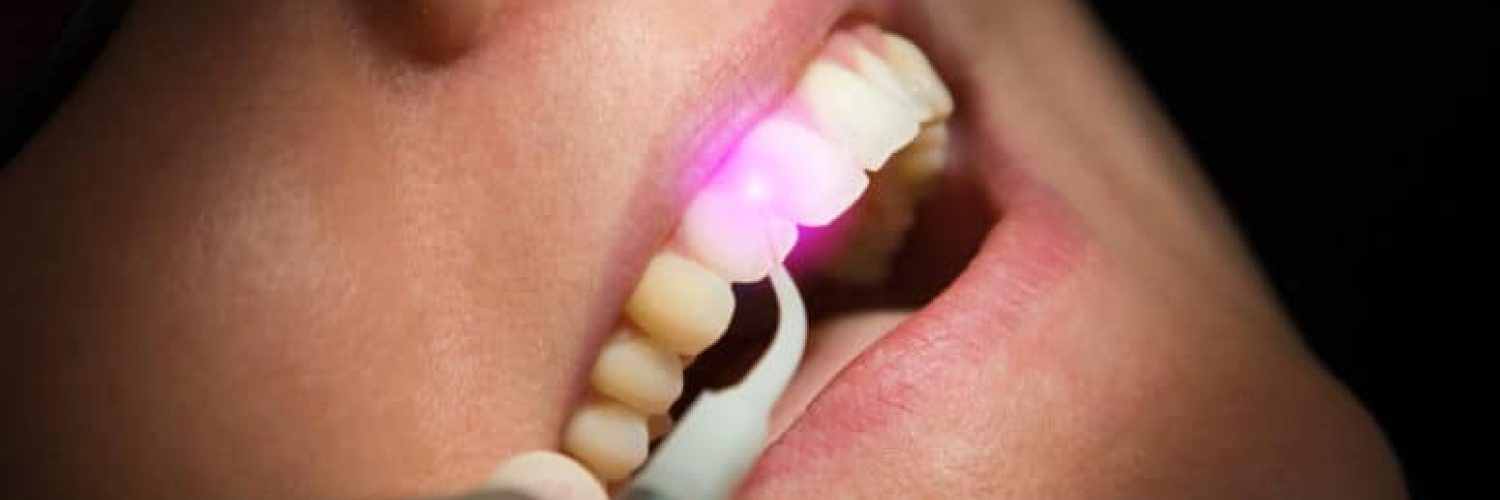
What Is a Dental Laser and What Can It Treat?
A dental laser is a device that delivers concentrated light energy to treat oral tissue with precision. Soft tissue lasers, also called diode lasers, treat inflamed gums, cold sores, canker sores, and sensitive teeth. Treatment usually involves less bleeding, less swelling, and faster healing than traditional instruments.
Most patients hear the word laser and picture something dramatic. The reality is quieter and far more routine. A soft tissue laser looks like a slim pen with a fiber tip, and many patients feel only warmth during treatment.
Understanding what the technology actually does helps you decide whether it belongs in your care plan.
How a Dental Laser Works
Laser light is a single wavelength of concentrated energy. Different wavelengths interact with different tissues, which is why dentistry uses more than one type of laser.
Diode lasers target pigmented tissue and fluid. The energy is absorbed by soft tissue and converted to heat, allowing the dentist to remove, reshape, or disinfect tissue in a controlled way. Because the same energy seals small blood vessels as it works, bleeding stays minimal.
Hard tissue lasers use a different wavelength that interacts with the mineral content of enamel and bone. Those devices can prepare teeth for fillings in select cases.
Eagle Rock Dental Care uses a soft tissue diode laser in Idaho Falls for a defined set of treatments.
What a Soft Tissue Laser Treats
The applications are practical rather than exotic. Each one addresses a problem patients already recognize.
Sensitive Teeth
Exposed dentin contains microscopic tubules that carry sensation toward the nerve. Cold air and cold drinks trigger fluid movement inside those tubules, which the nerve reads as pain.
Laser energy seals the openings of the tubules. Many patients notice a reduction in cold sensitivity after treatment, sometimes after a single visit. Results vary based on the underlying cause, so your dentist will still identify why the dentin became exposed.
Cold Sores and Canker Sores
Cold sores follow a predictable arc: tingling, blister, ulcer, crust. Laser treatment applied during the earliest stage can shorten that arc, and many patients report the lesion never reaches the blistering stage.
Canker sores respond as well. Laser treatment reduces discomfort quickly, which matters when the sore sits somewhere your tongue cannot avoid.
Gum Inflammation and Bacterial Reduction
Bacteria live in the pockets between teeth and gums. Laser energy disinfects those pockets, reducing bacterial load in areas a hygiene instrument reaches mechanically but cannot sterilize.
Some practices offer laser bacterial reduction before a cleaning. The idea is straightforward: fewer live bacteria at the start means less bacterial spread during the cleaning itself.
Gum Reshaping
Uneven gum tissue can make teeth look short or asymmetrical. A laser recontours that tissue precisely, and healing typically proceeds faster and with less discomfort than scalpel surgery.
Laser reshaping also helps expose more tooth structure before a crown or filling, giving the dentist a clean margin to work against.
Frenum Release
A tight band of tissue under the tongue or lip can restrict movement, affect infant feeding, or pull on gum tissue. Laser release involves minimal bleeding and often no sutures.
Why Patients Often Prefer Laser Treatment
The practical advantages show up in recovery rather than in the appointment itself. Reported benefits include:
- Reduced bleeding during and after treatment
- Less need for sutures in small soft tissue procedures
- Lower post-operative swelling
- Faster tissue healing in many cases
- Reduced need for local anesthetic in minor procedures
Sound matters too. The laser produces no drill whine and no vibration, which lowers anxiety for patients who dread the noise more than the treatment.
What a Dental Laser Cannot Do
Honest limits build trust, so consider these boundaries.
A soft tissue laser does not replace scaling and root planing for advanced periodontitis. It supplements that treatment. The Centers for Disease Control and Prevention reports that periodontal disease affects a substantial share of adults over thirty, and controlling it requires mechanical removal of tartar below the gumline.
Lasers also do not whiten teeth by themselves, do not repair cracks, and do not regrow lost gum tissue. Recession that has already occurred needs a graft, not light energy.
Deep decay still requires removal of the damaged structure and a restoration. A laser can assist in some cases, but it does not eliminate the need for a filling.
Is Laser Treatment Safe?
Diode lasers have a long clinical track record in dentistry. Providers complete training and certification before using them, and both patient and team wear protective eyewear during treatment.
Risk rises with operator inexperience rather than with the technology itself. Ask who will perform the procedure and how often they perform it. Reputable practices answer that question directly.
Patients with certain medical conditions or medications should disclose them beforehand. Your dentist reviews your health history and adjusts the plan when needed. You can explore the full list of services to see how laser treatment fits alongside other options.
Frequently Asked Questions
Does dental laser treatment hurt?
Most patients feel warmth rather than pain. Many soft tissue laser procedures need little or no anesthetic. Your dentist will still numb the area for larger procedures or for anxious patients.
How much does laser treatment cost?
Cost depends on the procedure and on your insurance plan. Some laser treatments carry codes insurers recognize, while others are billed as part of a larger service. Ask for an estimate before treatment so there are no surprises.
Is a dental laser better than a drill?
Neither tool replaces the other. Soft tissue lasers excel at gum and mucosal work. Drills remain the standard for removing decay and shaping teeth for restorations.
How long does healing take after laser gum treatment?
Many patients return to normal eating within a day or two. Complete tissue healing generally takes one to two weeks, depending on the size of the treated area and your overall health.
Can a laser treat gum disease without a deep cleaning?
No. Laser disinfection supports periodontal therapy, but scaling and root planing removes the tartar that feeds the infection. Skipping that step allows the disease to continue.
Reviewed by Dr. Doug Barnard, DDS
This article is for informational purposes only and does not constitute medical or dental advice. Consult a qualified dentist for diagnosis and treatment recommendations specific to your situation.